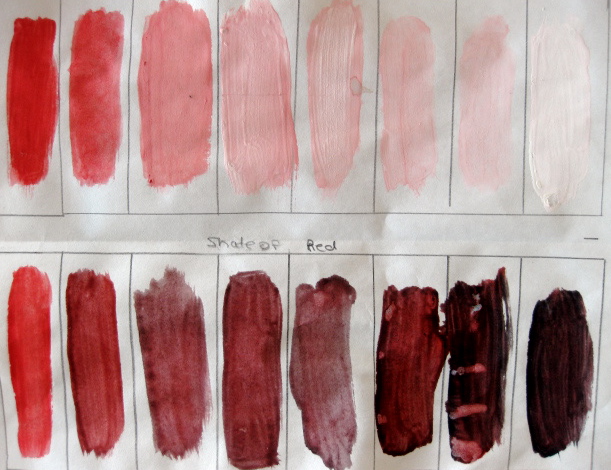
Tints and Shades

Sample of tints and shades of red

Sample of tints and shades of red

I love teaching my students how to make tints and shades because it gives them the freedom to make their own colors and and they are always amazed how many colors they can make by using black or white and another color.

Since I am laying a foundation for color mixing the rule in my class is they must make a tint and shade of a primary color or if they want a secondary color they must mix it first. This reinforces mixing secondary colors.

Begin by explaining or reviewing what a tint and shade is. You can show a slideshow of art work that show tints or shades to show your kids what they are capable of doing. Introduce the word momochromatic colors to your older students.

Start by letting your students choose one hue to work with. On their plastic plate they should place a spoonful of white, black and 2 amounts of a the hue of their choice.
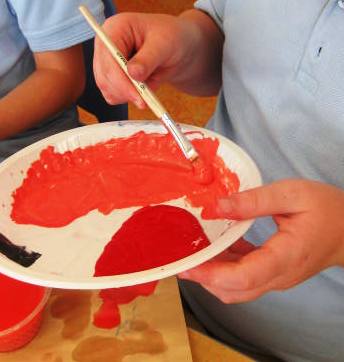
Grade three were given a white piece of paper and they cut out two big shapes. They were to show their pure hue gradually get lighter (tint) on one shape and gradullay get darker (shade) on the other shape.  They could either start in the middle and work out or start on the outer edge of their shape and work in.
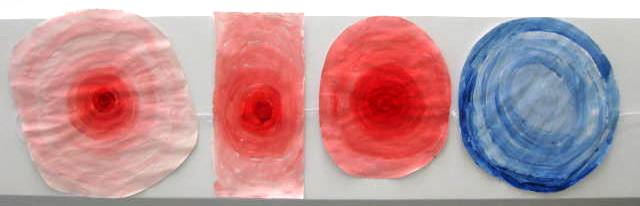
This is an example of a tint
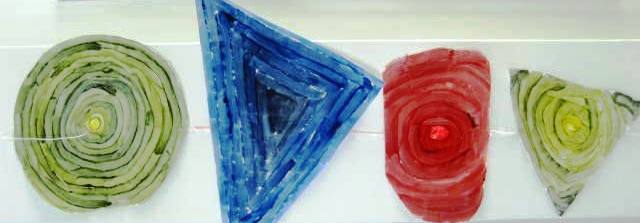
This is an example of a tint

This is an example of a shade

This is an example of a shade

Grade five practised making tints and shades on a piece of paper and then drew a cityscape with curved buildings, to make their art work a little more interesting. Their challenge was to fill in all the white space of their drawing with tints and shades of the color they chose. If they chose a secondary color (orange, green or purple) they had to first mix it with the primary colors. This was a great project for them to because the final result is stunning and they really grasped the idea of tints and shades.

Filling in the design with tints and shades

Filling in the design with tints and shades

Here are some examples of fabulous artwork done by making a tint or a shade of a color.

If you know anyone that might find this post useful, I’d really love it if you share this with your fans or followers today. All it takes is a simple click on the ‘like’  and share buttons below. Thanks!

PS: Did you know Art Lessons for Kids has a Facebook page and you can follow my adventures on Twitter (@Ms_Alejandra)? Click on over!

Sign up today for The Happy Whole Teacher messages and get some lovin’ pep talks to keep you happy, balanced, energised and inspired. Click on the image below to join for FREE. I would love to have you in my tribe.

Become whole again and change your life.  Let me show you how.
Become whole again and change your life. Let me show you how.

Fractured Art

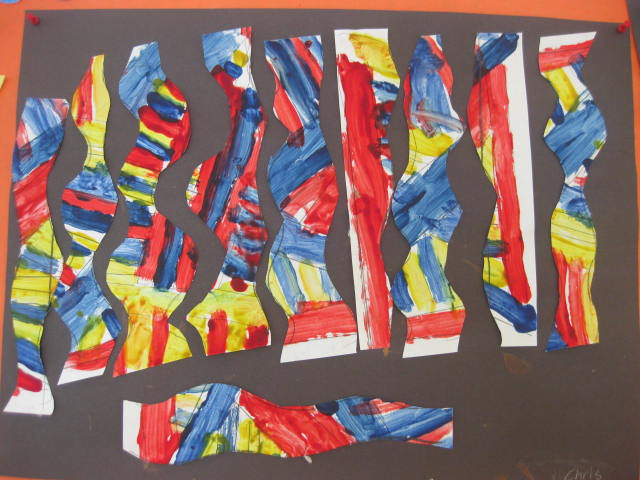
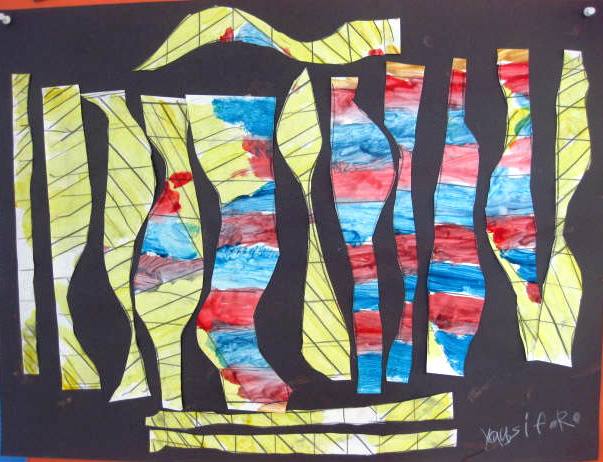
I am always trying to think of creative ways to reinforce some of the elements of art. Here is a great project that will help you do just that.  Kids will learn or review, depending on the age level, lines, primary colors, shape, space and even value.

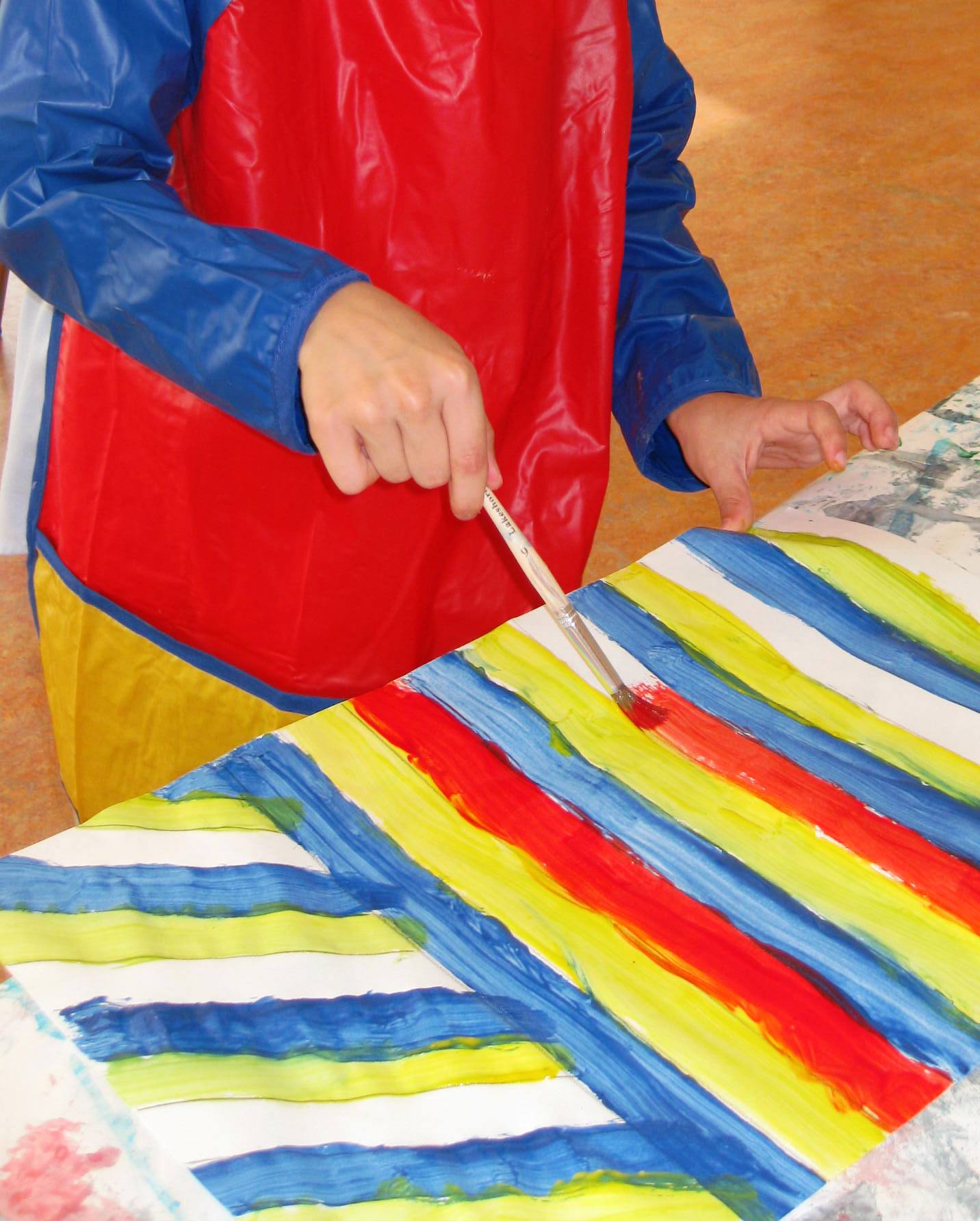
After discussing these elements, give your students a 12 x 18 piece of white paper, pencil and ruler. They are to make a mix of vertical, diagnal and horizontal lines that can either be straight, zig-zag or wavy. Once they have outlined their lines with a black crayon, they go to the painting station where there are paint cups with the primary colros waiting for them. Go over the routine of how to use a brush (wash your brush between colors) and starting with one primary color they paint diferent sections of their paper. Remind them that two same colors cannot be next to each other! Then they go onto the next primary color and so on.

Dividing the paper into sections

Dividing the paper into sections

Once their painting is dry, they need to cut up their paper and keep the pieces in the same order they are cutting them because they will glue them down onto a large piece of black paper, kind of like a jig saw puzzle. When they glue them down, there remind them to keep a small space between strips.

Painting in each section

Painting in each section

The final result is beautiful and the kids love to see them when they are finished. this project can be adapted to any age level. Instead of painting with the primary colors you could paint different shades or tints of a hue (color), use only warm or cool colors, complementary colors, etc. The possibilties are endless!


Sign up today for The Happy Whole Teacher messages and get some lovin’ pep talks to keep you happy, balanced, energised and inspired. Click on the image below to join for FREE. I would love to have you in my tribe.

Become whole again and change your life.  Let me show you how.

Become whole again and change your life. Let me show you how.
Color Wheels

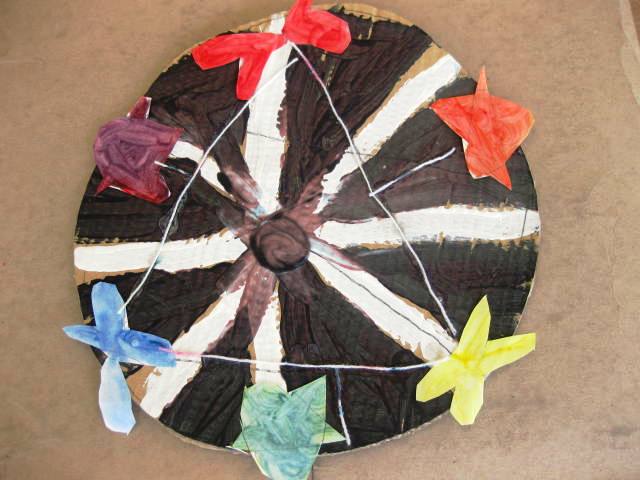
Grade one color wheel

Grade one color wheel

Teaching how a color wheel works is fun for kids and it teaches primary and secondary colors. I decided that all of my grades would make different kinds of color wheels. I am big on displays so I thought that it would look lovely for a final display.

Essentially, a color wheel is a tool to visually see the postion of the primary colors and the secondary colors which are mixed from  red, yellow and blue. Experiment beforehand with this and have your students mix, mix mix! They love this and it’s important for them to get as much hands on experience because you learn so much more from DOING!

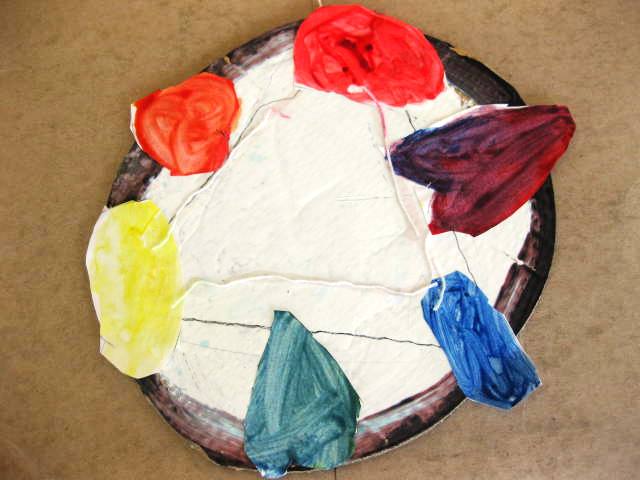
After the kids have mixed, explored and discovered,  they are ready to make their own color wheels. Here are some samples of some of the color wheel my students made. Grade one made theirs the following way. I gave out pre- cut cardboard circles and then gave out a 9 x 12 piece of white paper which the students folded into 6 sections. Their instructions were to draw 3 identical shapes and paint them with the primary colors.  The shapes needed to be simple with no details and just an outline. Then they made an outline of three other identical shapes. Their challenge was to make the secondary colors by mixing two primary colors together. They needed to make 3 new colors. I gave out plastic plates with some red, yellow and blue paint. Tip: plastic plates can be washed an re- used again and again!

They collected their water container, paint brush and protective paper for the table. It’s good to remind the students that they must keep their three colors ‘clean’ and can mix colors on another part of their plate. They must remember to wash their brush between colors using their water cup and dry their brush on the protective paper before mixing or changing colors. This is a routine that needs to be done over and over till they get it and it’s automatic.

Once they made their new colors (green, orange and purple), they painted their remaining shapes. I then gave out their cardboard circles and they made some lines on them for divisions and painted them in using black and white. When everything was dry, they glued their ‘primary color’ shapes at the 12 , 3 and 9 o’clock marks on their circles and the secondary colors inbetween the primary colors. Then they glued yarn between the primary and secondary colors.

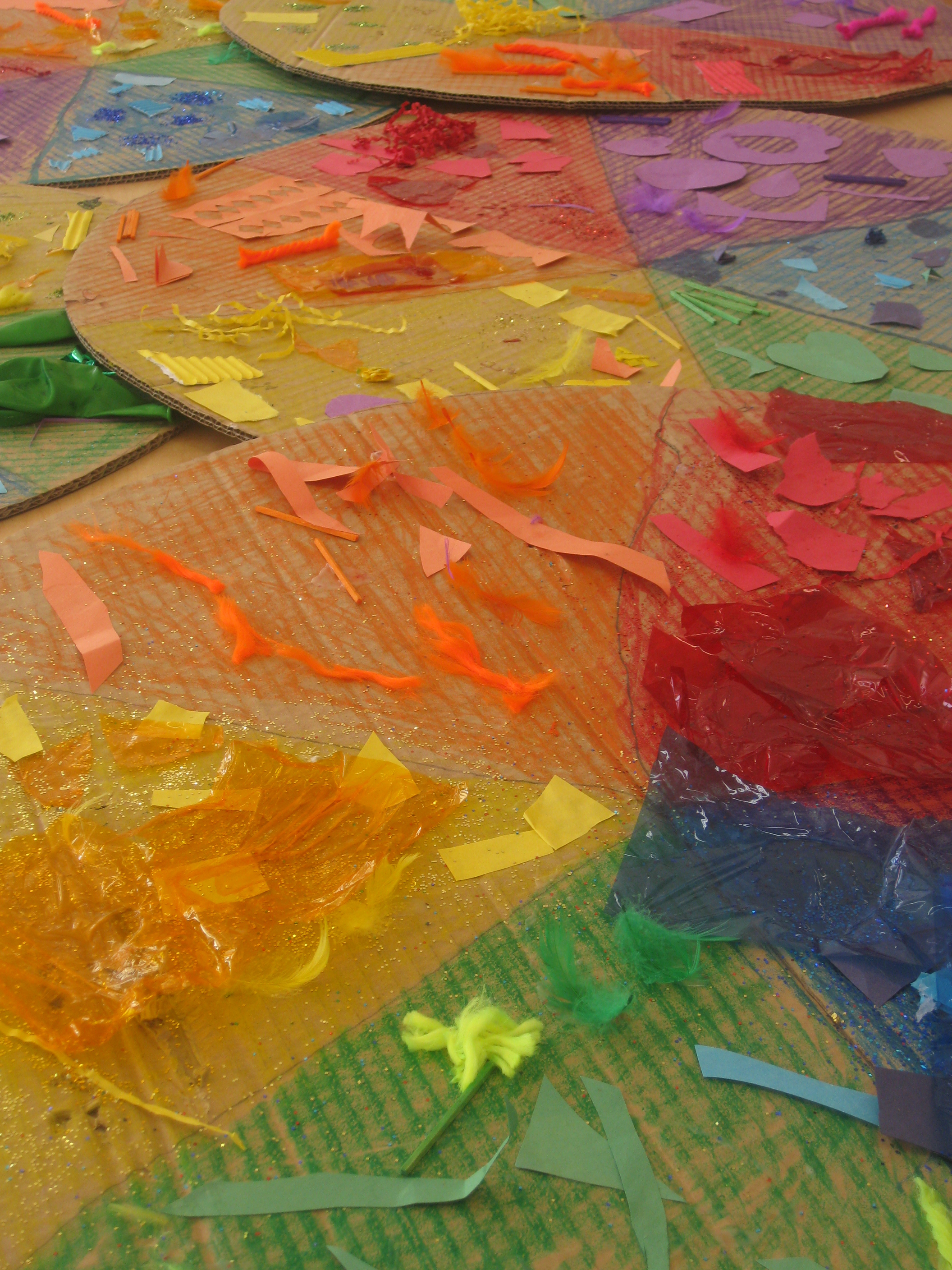
With my grade two class we made color wheel pizzas. These were a lot of fun and the kids loved doing them. They also looked stunning once they were finished and displayed. See my display page for ideas. Anyway, after the kids experimented mixing colors and could tell me how to make the secondary colors,  I gave them a giant pre-cut cardboard circle which they divied up into 6 sections. They colored the primary colors and secondary color sections with crayon and then had to fill in each section with ‘toppings’ which were different kinds of paper and magazine cut outs for each color. They brought in from home other toppings such as balloons, wrapping paper etc.. When they were finished , the students sprinkled each section with glitter ‘cheese’. The end result was gorgeous and delicious!

Starting with the primary colors

Starting with the primary colors

Adding the toppings

Adding the toppings


Gorgeous results!

Gorgeous results!