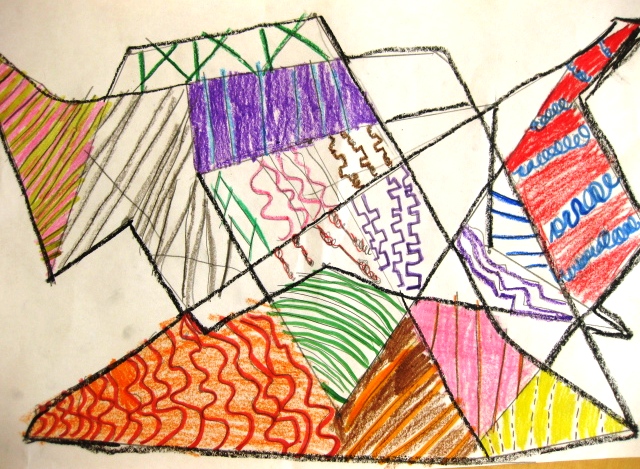
Lines All Around


Filling in spaces with different kinds of lines

Filling in spaces with different kinds of lines

I have started my next big unit on LINES as part of the Elements of Art Theme. It’s important for kids to have an understanding of these elements which will help them when they go and make their own art. By knowing what the seven elements (line, shape, form, color, value, texture and space) of art are, kids will appreciate that all the art in the world is done with one or more of these elements.

I choose to look at each element seperately so that my students can really get a good grasp of them  and practice using them when making their own art work.

Start by telling your students that they will become a detective. This is a good time to define what a detective is and then tell them they will be a ‘line detective’ This is a hit with younger kids, grades 2 down.  We first brainstorm all the lines we know and I let my kids come up to the smartboard and draw their lines. We them establish that a line is a mark made by a pointed tool such as a pencil, crayon, marker, paintbrush, tree branch, etc. For older kids you can get into more detail about what a line is. It’s important for kids to learn that lines can be vertical, horizontal, straight, diagnal, wavy, zig-zag and curved. Of course add more ‘line’ words to your list but these are essentially the basic lines to know.

Then give each student their sketchbook, a pencil, marker and a crayon and hunt for lines in the classroom. Once they find a line, they record it in their sketchbook by copying it. Once you have found some interesting lines in the classroom, go outside and record more lines.

Kids have a great time finding lines and it makes them aware of all the lines around them. When you come back to class discuss your findings and then show a slide show (that you previously made!) showing lines in nature such as leaves, buildings, birds,  architecture, water ripple etc. Have your kids point to the lines they see and use the correct word: horizontal, curvy, zig-zag, vertical, etc.

Sign up today for The Happy Whole Teacher messages and get some lovin’ pep talks to keep you happy, balanced, energised and inspired. Click on the image below to join for FREE. I would love to have you in my tribe.
Become whole again and change your life.  Let me show you how.
Become whole again and change your life. Let me show you how.

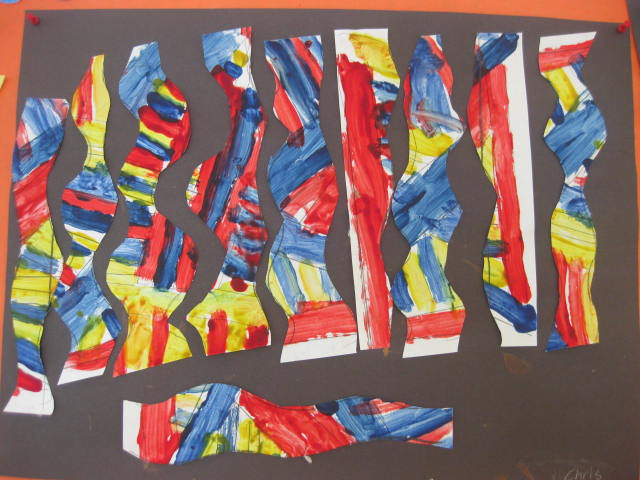
Fractured Art

I am always trying to think of creative ways to reinforce some of the elements of art. Here is a great project that will help you do just that.  Kids will learn or review, depending on the age level, lines, primary colors, shape, space and even value.

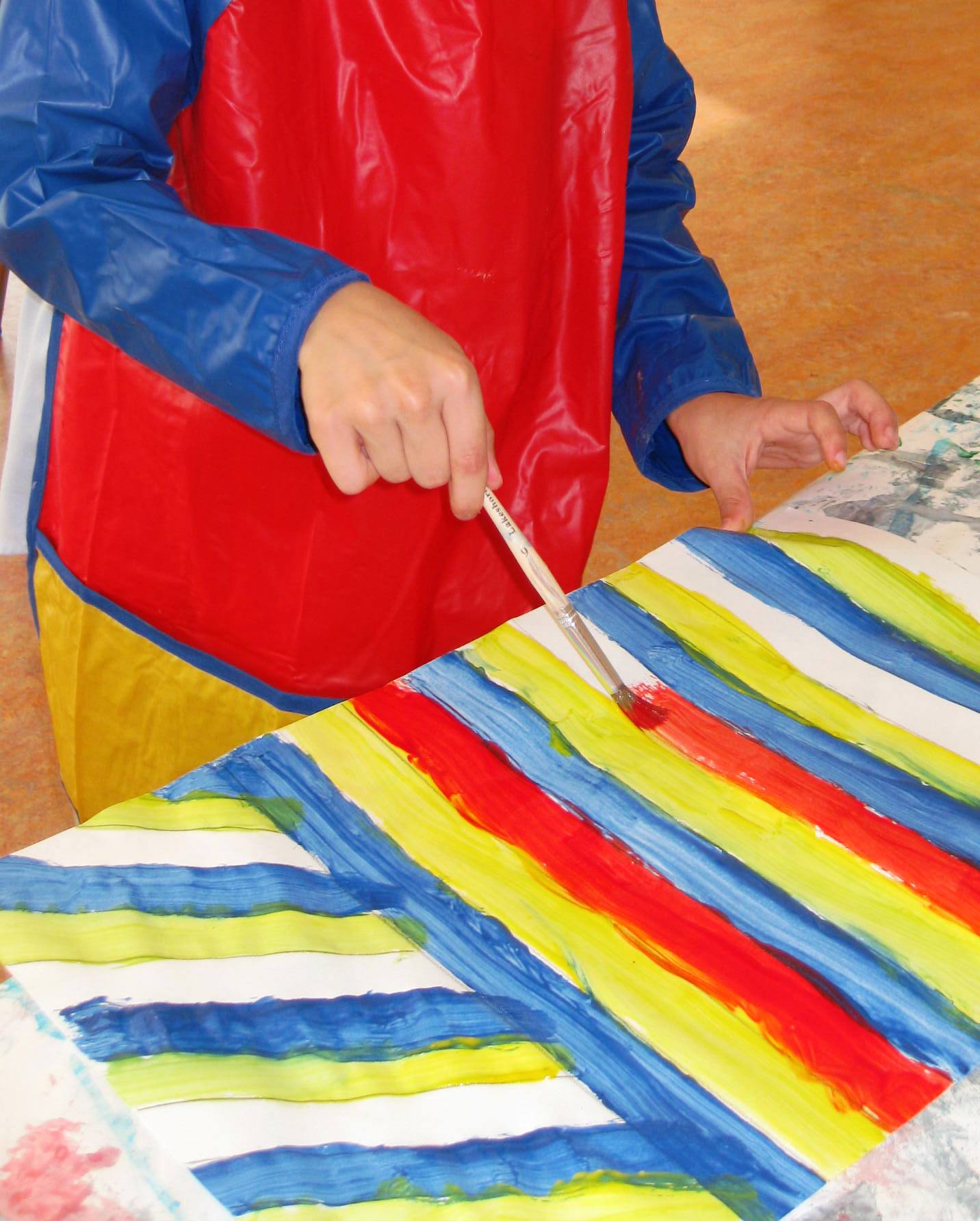
After discussing these elements, give your students a 12 x 18 piece of white paper, pencil and ruler. They are to make a mix of vertical, diagnal and horizontal lines that can either be straight, zig-zag or wavy. Once they have outlined their lines with a black crayon, they go to the painting station where there are paint cups with the primary colros waiting for them. Go over the routine of how to use a brush (wash your brush between colors) and starting with one primary color they paint diferent sections of their paper. Remind them that two same colors cannot be next to each other! Then they go onto the next primary color and so on.

Dividing the paper into sections

Dividing the paper into sections

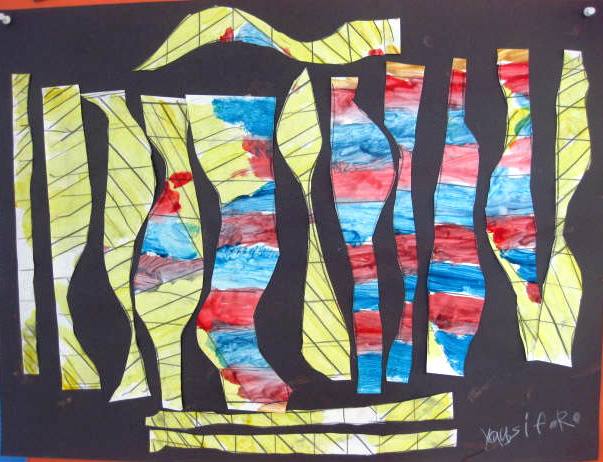
Once their painting is dry, they need to cut up their paper and keep the pieces in the same order they are cutting them because they will glue them down onto a large piece of black paper, kind of like a jig saw puzzle. When they glue them down, there remind them to keep a small space between strips.

Painting in each section

Painting in each section

The final result is beautiful and the kids love to see them when they are finished. this project can be adapted to any age level. Instead of painting with the primary colors you could paint different shades or tints of a hue (color), use only warm or cool colors, complementary colors, etc. The possibilties are endless!


Sign up today for The Happy Whole Teacher messages and get some lovin’ pep talks to keep you happy, balanced, energised and inspired. Click on the image below to join for FREE. I would love to have you in my tribe.

Become whole again and change your life.  Let me show you how.

Become whole again and change your life. Let me show you how.

Lines, Geometry and Primary Colors!

Mondrian inspired paper collage

Mondrian inspired paper collage

Here’s another great art project that involves exploring lines, geometry and using primary colors. This art project is inspired by Dutch abstract artist Piet Mondrian.  There is plenty of information on the web plus if you go to google images you’ll find many wonderful examples of his work. Before starting this project I made a slide show of many of Piet Mondrian’s art examples (from google images of course)  as well as Mondrian inspired art work from other artists.

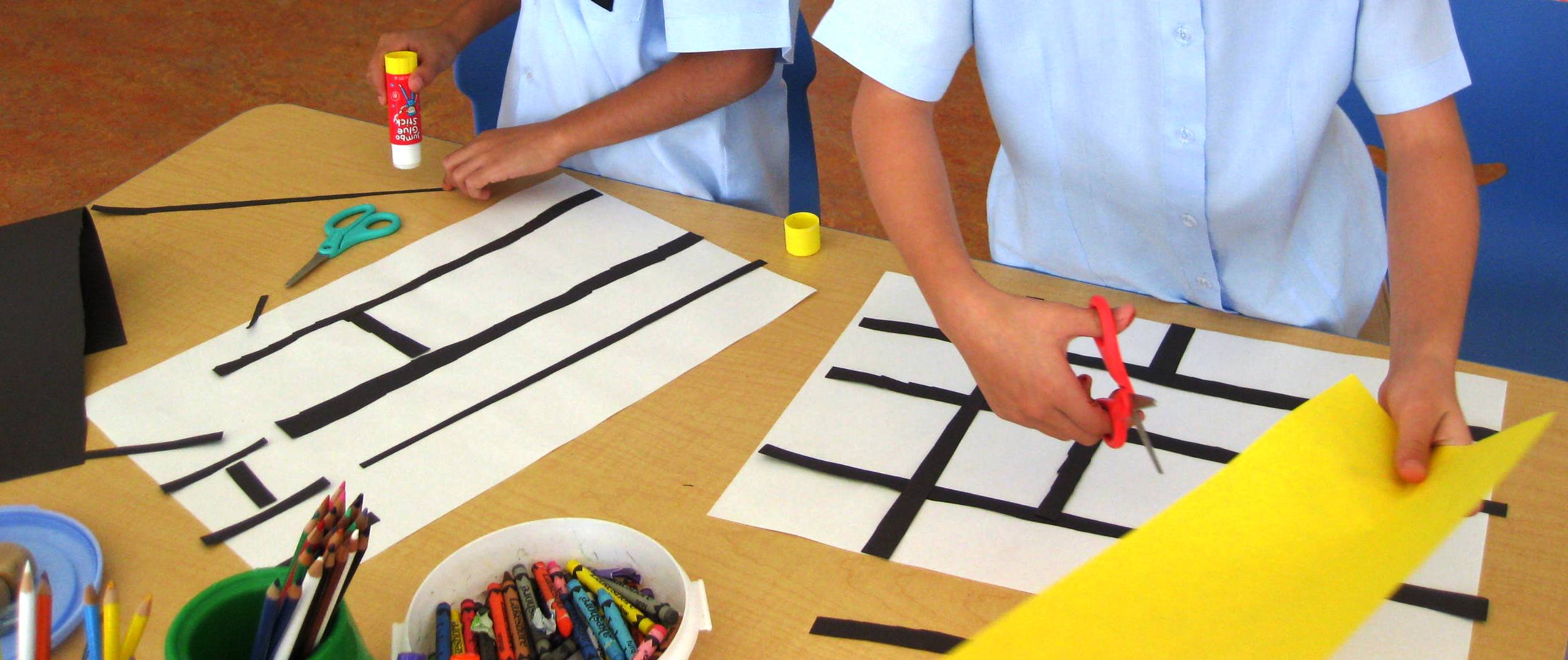
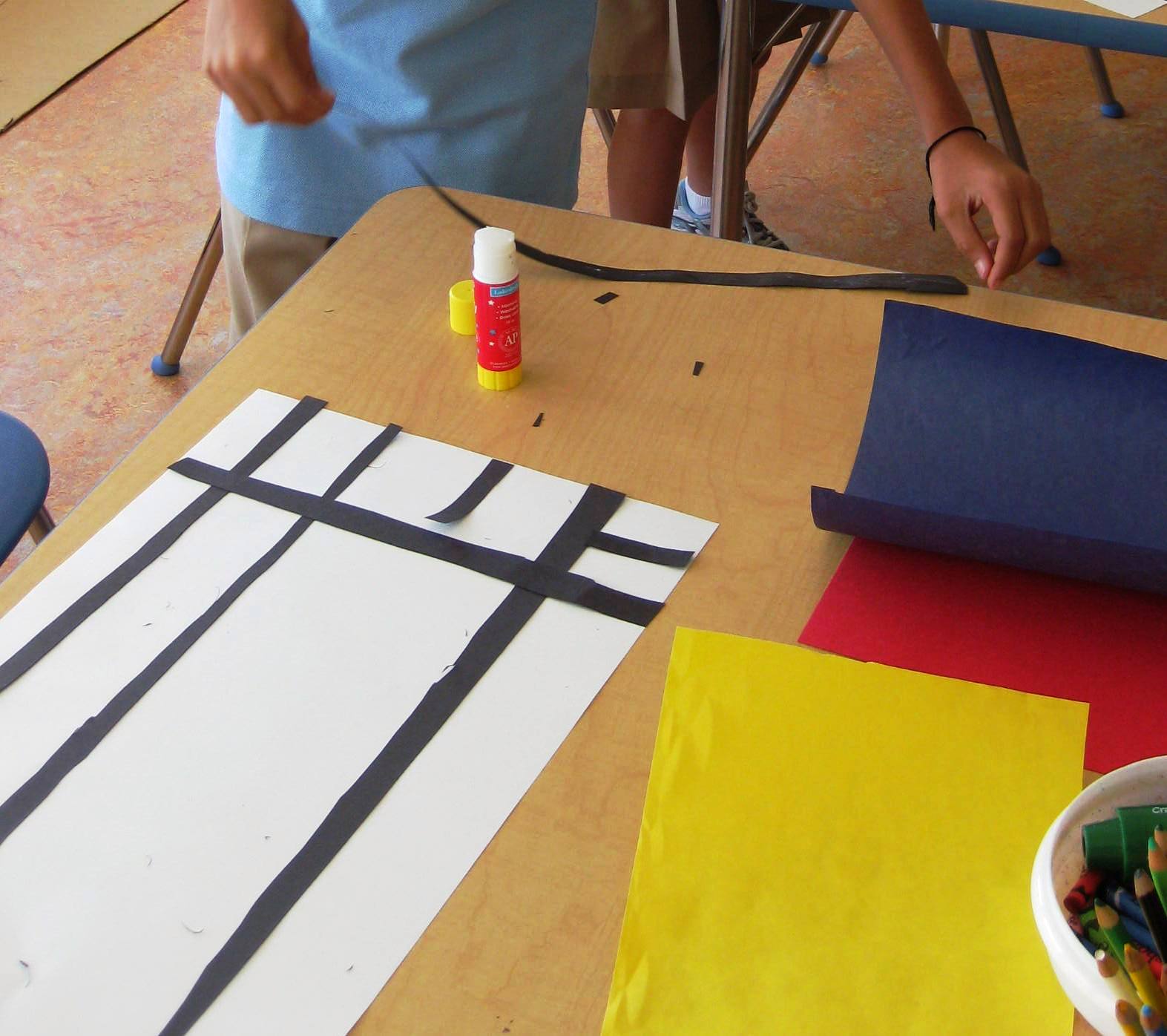
Explain to the students that they will make an abstract collage using black, red, yellow and blue paper. Give out a large 18 x 12 white piece of paper, (I love to give kids plenty of space and 9 x 12 paper is not good enough!) . Hand out red, yellow and blue paper (primary colors) plus scissors, a ruler and a glue stick. Tell them to put these materials aside for a bit as they will start with black paper. Give out black paper the same size as your white paper and tell your student to cut it into thin strips cutting horizontally. Ten thin strips is plenty. Tip: to save paper two students can share one piece of black paper.

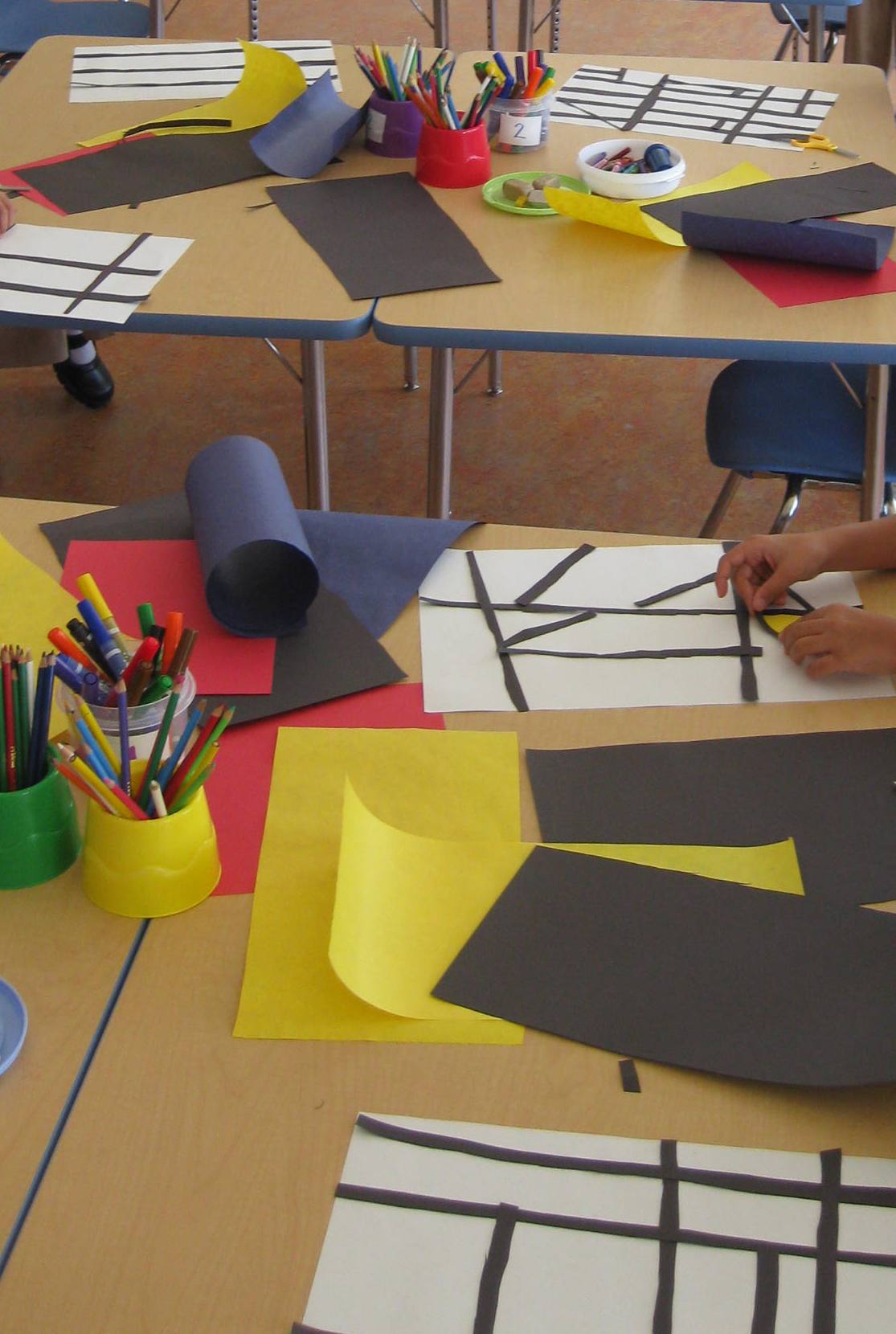
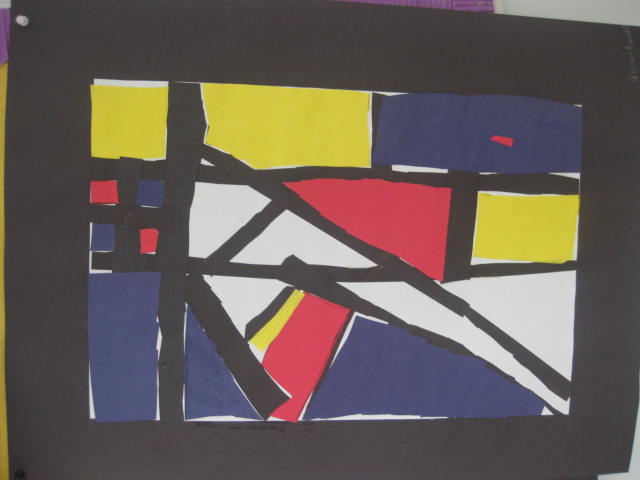
Next, have the kids play around a bit with their ‘lines’ and to place some strips horizontally and the rest vertically and 1 or 2 strips  diagnally. The vertical one will need to be trimmed.  Encourage them to place shorter lines within a square or rectangle section. See the sample below.

Thinking about line placement

Thinking about line placement

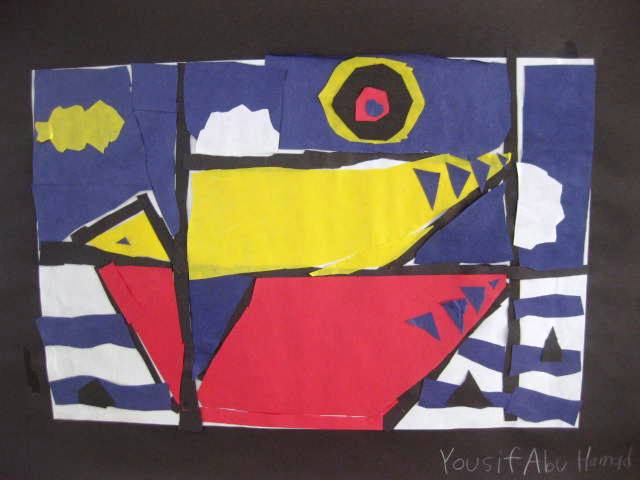
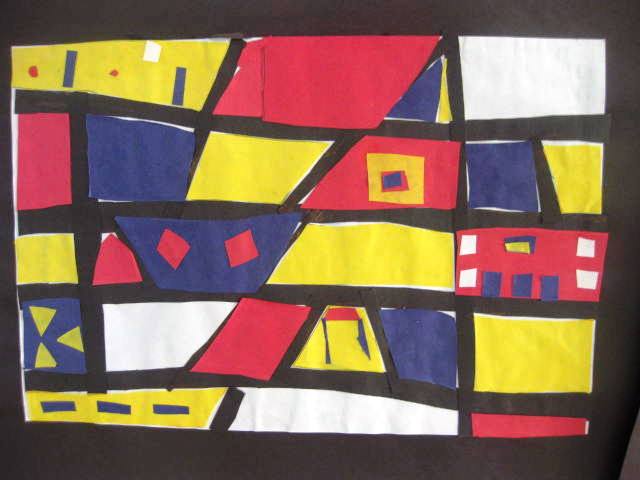
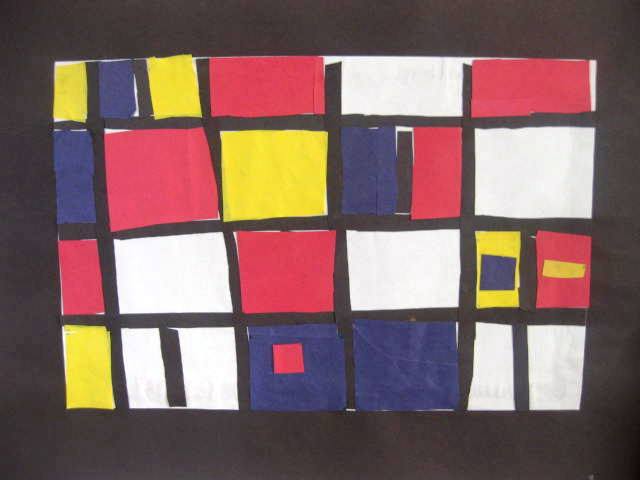
Once they are happy with their design, they can glue their lines one by one carefully so they don’t lose their original design.  They should have a white piece of paper with different rectangles, squares and even triangles. The next part of the project involves filling in most of the areas with either red, blue or yellow paper. This involves them measuring the section with a ruler. Some kids like to place the colored paper over the section and figure out the size. This is ok too because it’s showing creative thinking skills!

It’s important to stress that one or two sections should remain white. They can also place smaller shapes of a different color within shape that already has color. Let them explore and experiment. The results are amazing!


I like the bird!

I like the bird!


I like the shapes within the shapes

I like the shapes within the shapes

Once your students are happy with their design, show the slideshow of Piet Mondrian’s artwork and have the kids compare, contrast and discuss the artist’s work with their own final piece.

Note: For this project, I preferred to show samples of Piet Mondrian’s art at the end of the project because I wanted my student to explore the lines, shapes and color placement without a sample to ‘copy’ from.  Most of them were so surprised to see that they were able to make artwork like someone famous too!

Sign up today for The Happy Whole Teacher messages and get some lovin’ pep talks to keep you happy, balanced, energised and inspired. Click on the image below to join for FREE. I would love to have you in my tribe.

Become whole again and change your life.  Let me show you how.
Become whole again and change your life. Let me show you how.