
So, how’s the school year treating you so far?
Let’s talk game-changers: those first few months! They’re like the backstage pass to an epic year in the art room. Think of them as the launchpad for your art adventure.
Think of them as the launchpad for your art adventure. We want a smooth takeoff and journey, not a “Houston, we have a problem” situation, right?
To help you hit the ground running, I’ve cooked up ten tips to help you thrive:
1. Organize Your Space: Arrange your classroom in a way that encourages creativity and flow. Make sure art supplies are easily accessible and well-organized.
2. Set Clear Expectations: Clearly communicate your classroom rules, procedures, and expectations from the very first day. This helps establish a positive and structured learning environment.
3. Get to Know Your Students: Learn about their interests, strengths, and any special needs or accommodations they may require. This information will help you tailor your lessons to their individual needs.
4. Establish a Routine: A consistent routine helps students feel secure and allows them to focus on their creative process. Make sure they know what to expect each day.
5. Inspire and Motivate: Share examples of great art, both from famous artists and from your own work. Encourage students to express themselves and experiment with different techniques and styles.
6. Provide Clear Instructions: When giving assignments, be specific about your expectations. Clearly outline the goals, criteria for success, and any specific techniques or skills you want them to practice.
7. Encourage Risk-Taking: Foster a safe space for students to take creative risks and try new things. Emphasize that making mistakes is an important part of the artistic process.
8. Incorporate Art History and Culture: Teach students about different art movements, styles, and artists. This helps them gain a broader understanding of the art world and can inspire their own work.
9. Offer Constructive Feedback: Provide feedback that is specific, actionable, and encouraging. Focus on both technical skills and creative expression.
10. Promote a Growth Mindset: Encourage the belief that artistic abilities can be developed with practice and effort. Celebrate progress and effort rather than just final products.
Remember, flexibility and a genuine passion for teaching art will help you create a positive and enriching learning experience for your students.
Love + oodles of creativity!
Alejandra xx
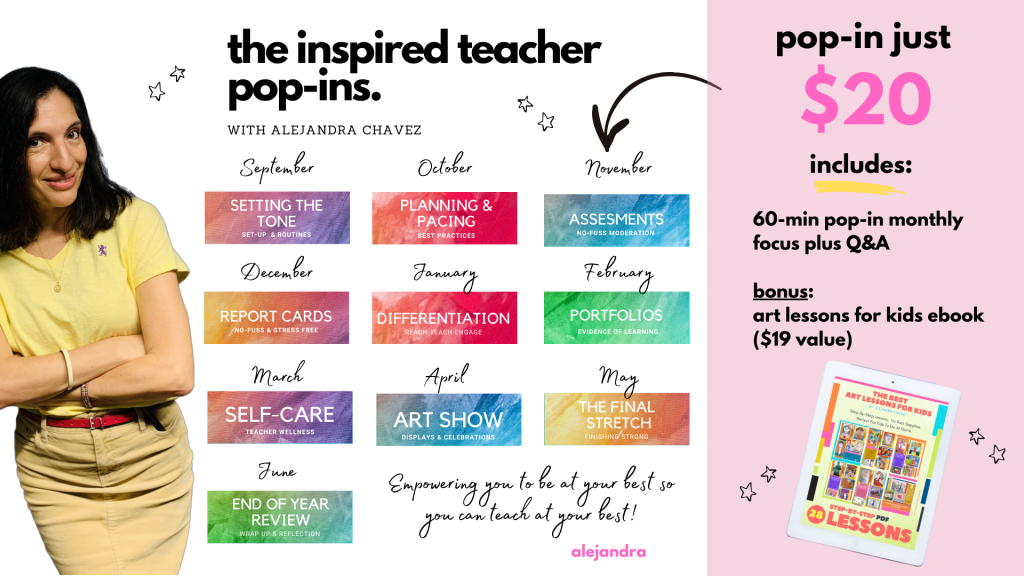
P.S. Pop-in for this month’s Inspired Teacher Pop-In! We’ll have a chat about planning and pacing your art program like a champ! Get ideas, get inspired, get the support you need to thrive! Click below to get the details.
Have you joined our private FB group, The Inspired Elementary Art Teacher?
 ART LESSONS FOR KIDS